A climbing grade can expose a cooling problem
The I-8 climb toward Alpine asks more of an engine than an easy drive around town. A sustained grade, warm weather and a loaded vehicle can make an existing cooling problem show itself. That does not mean every temperature rise has the same cause. A coolant leak, a fan problem, a thermostat issue or another mechanical fault needs diagnosis. Guessing at the shoulder is not a reliable way to decide whether the vehicle can continue.
Watch the temperature display and warning messages, but do not fixate on them at the expense of driving. If the gauge rises unusually, a warning appears or you see steam, find a safe place to stop as soon as conditions allow. Avoid hard acceleration or trying to make it to a favorite exit while the warning continues. The next stretch of uphill road may place more demand on the same system that is already struggling.
Stop safely before investigating the engine
Signal and reach a protected stop away from traffic when possible. Switch on hazards and follow your vehicle manual’s overheating instructions. In a dangerous traffic position, or if there is fire, injury or another immediate hazard, call 911. Safety around the vehicle comes before checking a fluid level. A narrow shoulder on a climbing grade is not a convenient work bay simply because the car has stopped moving.
Once safely stopped, turn the engine off as directed by the manual and allow it to cool. Keep passengers away from hot steam, traffic and moving engine components. Do not open a coolant cap on a hot engine: the pressurized system can release scalding liquid and steam. Do not reach into the engine bay to investigate a noise or fan. An engine that appears quiet may still have very hot parts and fluids.
For help with this situation, explore our light-duty towing service or towing in Alpine.
Treat dashboard warnings as useful information, not a diagnosis
When you call for help, describe what you observed rather than naming a part you have not checked. Useful details include the temperature warning, steam, a puddle, a smell, unusual noise, loss of power and whether the engine was shut off. Say how long the symptoms continued, but do not restart the engine just to produce a more detailed description. Photograph a warning message only if doing so is safe and does not delay getting clear of traffic.
A cooling system can behave differently at idle, on a grade and at road speed. A gauge dropping after the engine is shut off does not establish that the underlying fault is fixed. Likewise, having coolant in a reservoir does not prove that circulation or airflow is working. A mechanic can examine the system properly. A towing conversation helps choose transport, not certify that an overheating car is safe to drive again.
Why driving on can be the wrong experiment
Continuing with an overheating warning can risk further damage, especially if coolant has escaped or the system cannot remove heat. It may be tempting to drive with the heater on because it can draw some heat away in certain vehicles. That is not a repair or permission to continue up the grade. Follow the manufacturer’s guidance and stop safely rather than relying on a temporary change in the gauge as a successful test.
Do not pour liquid onto a hot engine or add fluids without knowing the correct reservoir, product and procedure. Mixing the wrong fluid or opening the wrong cap can make the situation worse. If the manual permits checking or topping up after the system is fully cool, follow it carefully. On a dangerous roadside, even a permitted maintenance step may be inappropriate. A safe location and a cooled system are separate requirements.
Give the tow driver the route and the vehicle details
For an I-8 pickup, share eastbound or westbound, the nearest exit or mile marker and whether the vehicle is on a shoulder or ramp. Near Alpine, mention Tavern Road or Alpine Boulevard only if that accurately describes where you stopped. On a rural route toward Lakeside, add road conditions and access details. A broad description such as “on the hill” makes it harder to identify the right approach and loading space.
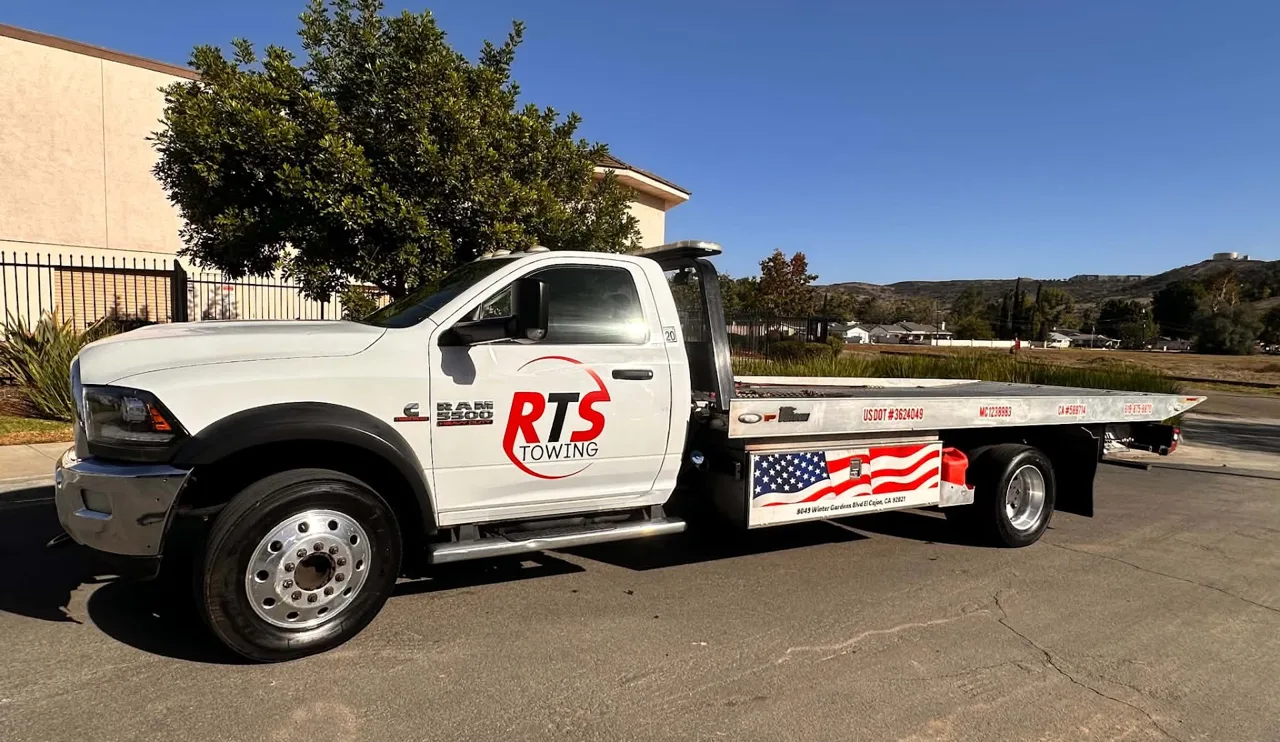
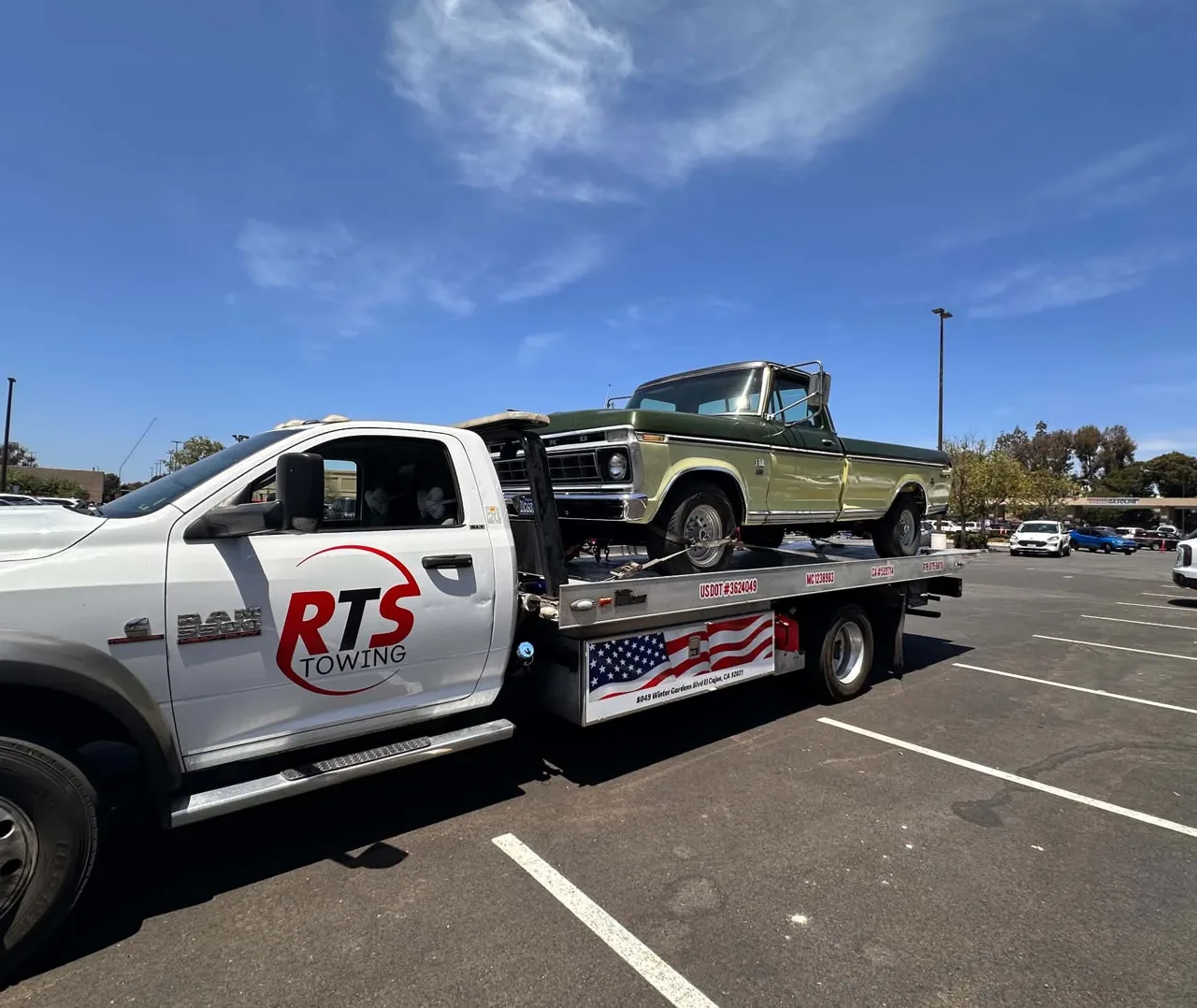
Tell RTS Towing the year, make and model, whether the vehicle can roll and your chosen destination. We use flatbed transport for light-duty vehicles, with all wheels off the ground. We confirm price and an arrival estimate before heading out, including at night or on holidays. Let us know if a mechanic has given specific instructions or if police are managing the scene. We can then discuss the pickup without making assumptions about access.
Prepare for the repair conversation, not another climb
Keep a short note of the symptoms and the road conditions for the repair shop. Mention whether the engine lost coolant, whether warning lights came on and whether you kept driving after the warning. Honest details help the mechanic decide what to inspect. Do not attempt to clear warnings or hide the symptom before the vehicle is checked. If a shop is closed, confirm its after-hours delivery arrangements before selecting it as the tow destination.
Once the vehicle is safely transported, keep your itemized receipt and ask your insurer about any reimbursement coverage. No membership is needed to call RTS Towing. We are based in El Cajon and serve the coast, city and backcountry throughout San Diego County. For an overheating car, a clear stop, a cool-down without opening a hot system and a sensible transport plan are more useful than trying one more uphill run.