The first wet drive deserves a different pace
After a dry stretch in San Diego County, the first rain can leave a familiar road feeling unexpectedly slippery. Water mixes with accumulated surface grime and oil, and visibility may drop at the same time. Road grip depends on the surface, drainage, tires and conditions, so there is no promise that the next bend behaves like the last one. Treat the change in weather as a reason to slow down and create more room, not as a test of your vehicle.
Before a wet trip, check tire condition, wipers and lights in a safe place. Use smooth steering, braking and acceleration, and leave more space from the vehicle ahead. Watch for standing water without making a sudden lane change. If rain is heavy enough that you cannot see the road clearly, look for an appropriate safe place to stop rather than continuing simply because other vehicles are still moving.
If traction changes, avoid abrupt reactions
A slide is unsettling, but a sudden steering correction or hard throttle can make controlling the vehicle harder. Look toward the safe path you want to take, reduce abrupt inputs and follow the handling guidance in your vehicle manual. Different vehicles and systems respond differently. This is not a substitute for driver training, and there is no universal maneuver that resolves every skid. Your speed and available space matter before a slide ever begins.
If the vehicle leaves the pavement, stop and assess from a safe position rather than automatically attempting to climb back onto the road. A shoulder that looked firm may be soft after rain. A ditch may hide a steep edge, debris or water. Spinning the tires can dig the vehicle in farther. If it is stable where it has stopped and nobody is in danger, preserving that position may be better than repeatedly trying to move.
For help with this situation, explore our winch-outs service or towing in San Diego.
Check people and scene safety before the vehicle
Call 911 for injury, immediate danger, a vehicle in traffic or a situation that needs emergency responders. If another vehicle or property was involved, follow the appropriate police and insurance process rather than treating it as just a tow. Do not stand in a travel lane to inspect damage or exchange details. On a curve or hillside road, approaching drivers may not see you soon enough to react to a person walking around the car.
If the vehicle is near moving water, do not walk into it to check depth or attempt a recovery. Floodwater can conceal road damage and create risks beyond a simple stuck tire. A routine light-duty winch-out is not a water rescue service. Tell the dispatcher exactly what you see and follow emergency guidance. Keep passengers together in a protected position when it is safe to move there; do not create another hazard trying to photograph the scene.
A useful recovery description includes the ground
For a winch-out assessment, RTS Towing needs more than the town name. Share the exact road or coordinates, the vehicle’s year/make/model and its position relative to the pavement. Is it on sand, mud, grass or an embankment? Are all wheels touching ground? Is it leaning, leaking or blocked by something? If you can safely take a photo from a protected place, it may help explain what words cannot show.
Also describe access for the tow truck: road width, a gate, steep driveway, soft shoulder or space to approach on firm ground. We confirm access before heading out rather than promising to reach every trail or slope. Do not attach a rope to an unknown point or ask another driver to pull the vehicle with whatever equipment is nearby. Improvised pulling can create new hazards even when the initial slide caused little visible damage.
Recovery and safe driving afterward are separate questions
Getting a car back onto solid ground does not mean it should immediately continue the trip. A wheel, tire, steering component or underside may have been damaged. If the vehicle hit a curb, barrier or object, tell the driver even if the body looks mostly unchanged. Recovery addresses the position of the vehicle; mechanical inspection addresses its roadworthiness. A new noise, vibration, leak or warning deserves attention before driving away.
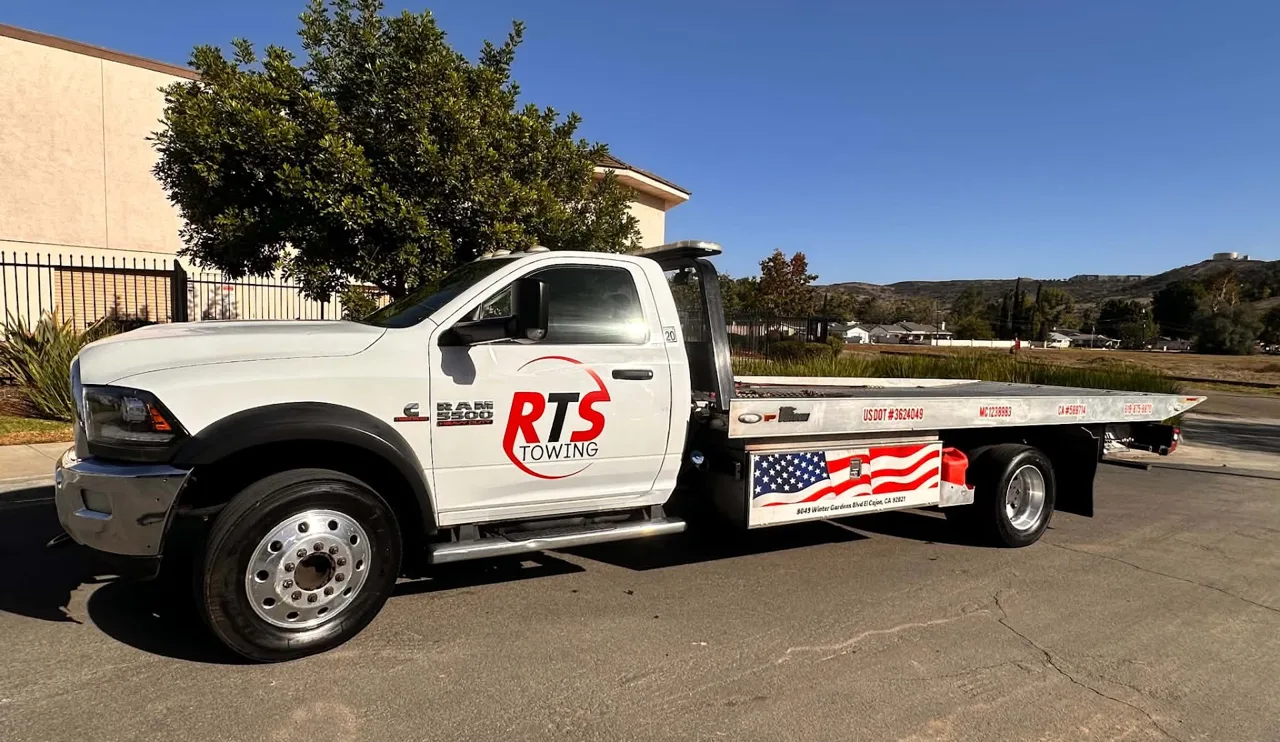
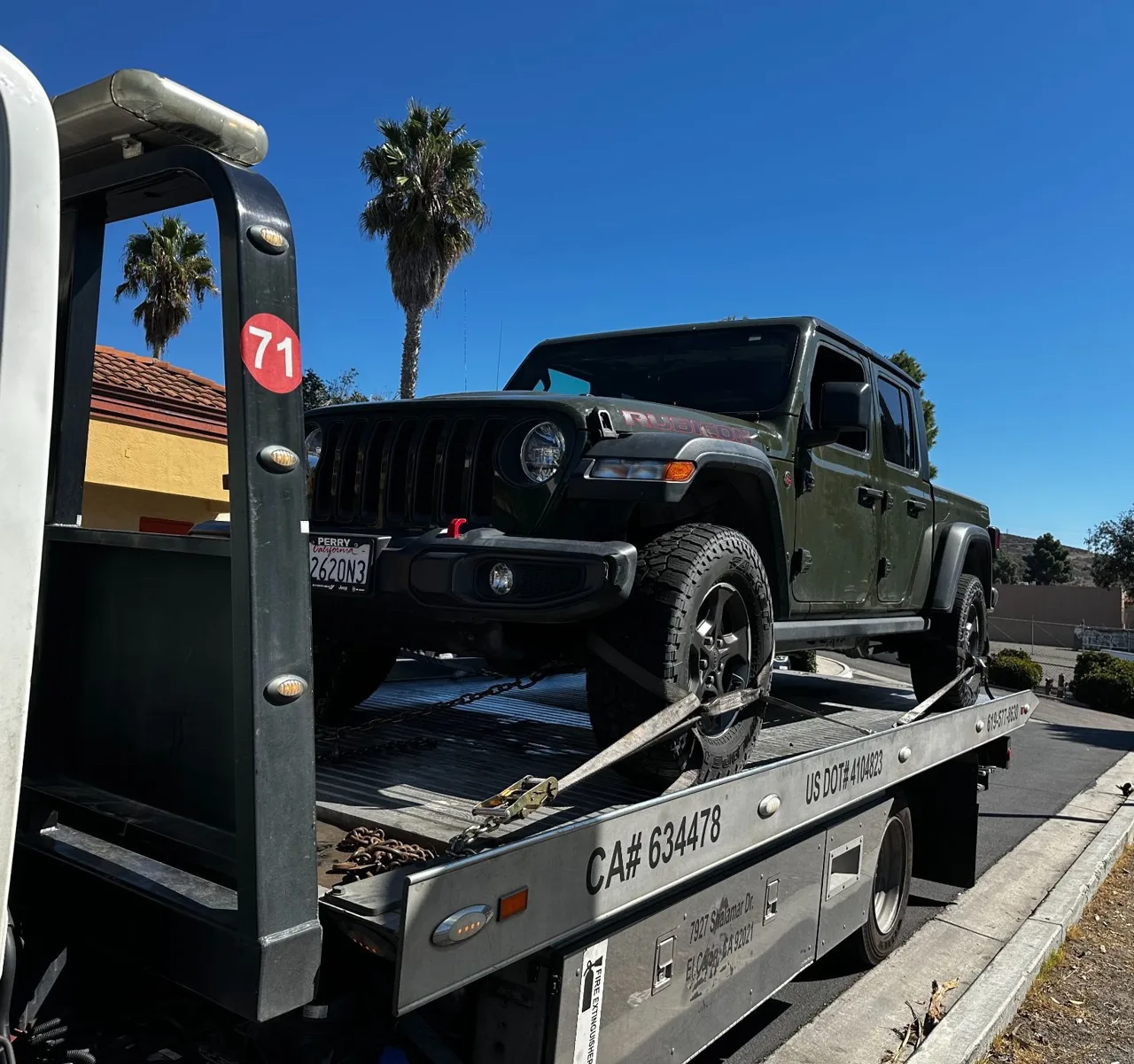
We can discuss flatbed transport after a winch-out or collision when driving is not appropriate. Cars, SUVs, pickups, vans and motorcycles are the light-duty vehicles we assess for our truck. Tell us where you want the vehicle delivered, and confirm the receiving location’s availability. We give the price and an arrival estimate before we roll. An honest access assessment is more valuable than a blanket promise that every wet-road recovery is straightforward.
Finish with records and a calmer plan
If you need an insurance claim, keep photos you safely collected, the scene information and the itemized towing receipt. Ask your insurer which records it requires. Do not assume a winch-out or tow is covered merely because the weather contributed to the incident. Coverage depends on your policy and circumstances. If you are shaken by the slide, arrange a ride rather than driving because you feel pressure to complete the journey.
For the next wet drive, give yourself time to respond gently and choose a route you are comfortable using. RTS Towing is based in El Cajon and serves all San Diego County, including city streets, freeway corridors and backcountry roads where access can be confirmed. No membership is needed to call. If you are off the road now, prioritize people, stop unnecessary wheel spinning and call or text with an exact location and ground description.